
Skip to Main Content

Member News

  • 30 Jun 2026 by Metro

    Summary

    As part of the I-5 North County Enhancements Project, Metro’s contractor OHLA USA, will be reconstructing the existing northbound Calgrove Bl on-ramp.

    Construction will take place during an extended period starting Tuesday, July 7, 2026 through August 2026. Activities will include roadway excavation, concrete and asphalt paving, electrical work, and metal beam guardrail installation.

    At the completion of construction, improvements are expected to enhance traffic flow and safety, reduce congestion, and make commuting smoother.

    What to Expect & Traffic Control

    Prepare for a continuous, 24 hours per day, full closure of the northbound Calgrove Bl on-ramp beginning Tuesday, July 7, 2026 through August 2026.

    • Detour: Traveling on Calgrove Bl, head north on Wiley Canyon Rd, and west on Lyons Av/Pico Canyon Rd to the northbound I-5.

    Essential Details

    • Work Hours: Continuous, 24 hours per day, on-ramp closure from Tuesday, July 7, 2026 through August 2026.

    • Day and night work will take place behind k-rail.

    • Speed limit within the construction zone is 55- miles per hour.

    Noteworthy

    Access to emergency responders will be maintained. Construction is a dynamic process. It is subject to weather conditions and information is subject to change. Visit the project website for the most up-to-date information and a weekly listing of ramp closures scheduled.
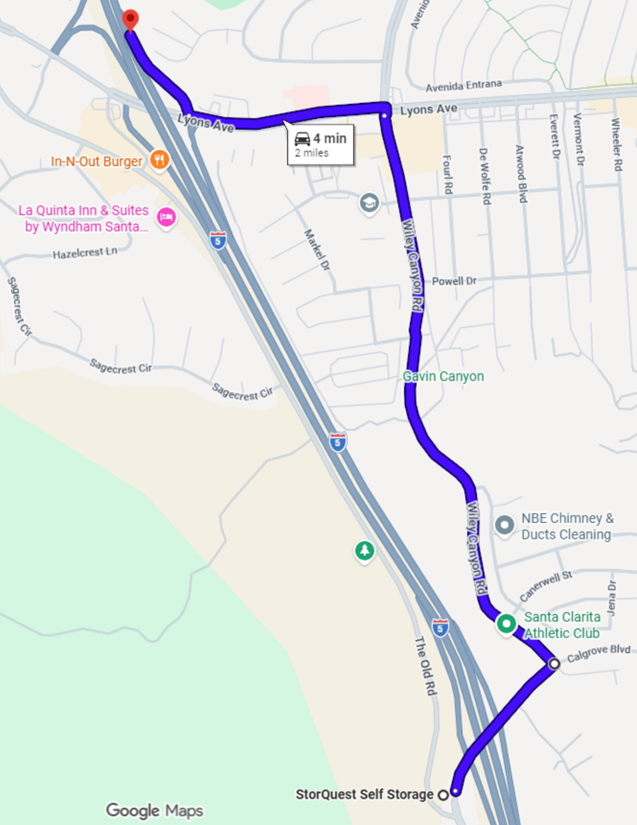


    Detour: Traveling on Calgrove Bl, head north on Wiley Canyon Rd, and west on Lyons Av/Pico Canyon Rd to the northbound I-5.
  • 29 Jun 2026 by Koegle Law Group, APC

    Koegle Law Group Can Employee Social Media Disclaimers Really Protect Your Business?

    For many business owners, social media has become part of the daily business environment—even when the posts themselves happen outside of work.

    Employees may list their employer on LinkedIn, connect with managers on personal platforms, comment on workplace issues online, or include a disclaimer such as, “views are my own.” While that kind of disclaimer may seem helpful, it does not always answer the more practical question employers face:

    What happens when online activity starts to affect the workplace?

    That is especially important for California employers, where workplace expectations, employee rights, company policies, and manager decision-making often need to be considered together.

    At Koegle Law Group, we work with businesses that want to build clearer policies and stronger systems before uncertainty turns into a larger workplace issue. Social media is one area where proactive planning can be especially helpful, because the line between personal expression and workplace impact is not always easy to identify in the moment.

    The goal is not to monitor every online interaction or make social media feel more complicated than it already is. It is to create clarity.

    When employees understand expectations around professionalism, confidentiality, and workplace conduct, businesses are better positioned to respond consistently. When managers understand appropriate boundaries online, leadership decisions can be made with greater confidence. When policies are reviewed before concerns arise, employers have a stronger foundation for addressing issues thoughtfully.

    For Santa Clarita business owners, this topic is especially relevant because social media visibility often overlaps with reputation, workplace culture, customer relationships, and team communication. Whether your business is growing, updating its handbook, training managers, or simply reviewing how online conduct fits into your workplace policies, this is an area worth thinking through before a concern lands on your desk.

    In our recent article, Koegle Law Group shares practical considerations for California employers, including:

    • Why employee social media disclaimers may not provide the protection businesses expect
    • How online activity can create workplace questions even when posts are personal
    • Why manager-employee social media connections deserve careful thought
    • How workplace policies can help set clearer expectations
    • Why handbook language, training, and documentation should work together
    • When social media concerns may call for a more careful review of the circumstances

    The article is designed to help employers think through social media policies in a practical, business-minded way—with a focus on clarity, consistency, and proactive planning.

    Read the full article here: Do Employee Social Media Disclaimers Protect Employers?

    At Koegle Law Group, we partner with California employers and business owners to provide practical guidance, clear communication, and proactive legal strategies designed to support informed decision-making over time.

    This communication may be considered advertising material under the rules of professional conduct governing lawyers in California.

  • 29 Jun 2026 by SchlickArt

    From Content Calendar to Marketing System: How Santa Clarita Businesses Can Stay Visible

    Most business owners we know are not short on effort.

    They’re showing up. They’re taking the photos. They’re posting when they can. They’re trying to remember the newsletter, the event recap, the holiday message, the client spotlight, the team update, and the “we should probably say something about this” post that always seems to appear out of nowhere.

    So naturally, a content calendar feels like the answer.

    And honestly? It helps.

    A good calendar gives your marketing some structure. It helps you plan ahead, organize ideas and avoid that familiar last-minute scramble of wondering what to post before the week disappears.

    But a calendar can only take you so far.

    Because consistency is not just about filling boxes with content ideas. It’s about knowing what each piece of content is supposed to do for your business.

    Is this post building trust?
    Is this blog moving future clients down your sales pipeline?
    Is this photo helping people recognize you before they ever meet you?

    That’s the difference between a content calendar and a marketing system.

    A content calendar tells you what to publish.

    A marketing system helps you understand why it matters, where it belongs and how it supports your bigger goals.

    For Santa Clarita business owners, that distinction matters. This is a relationship-driven community. People may hear about your business at a Chamber event, see your face online, read something helpful weeks later and then finally reach out when the timing is right.

    Your marketing can support that whole journey.

    Not with random activity. Not with content created just to “stay active.” But with a connected plan that helps people understand who you are, what you do, why it matters and how to take the next step when they’re ready.

    At SchlickArt, we help service-based businesses build that kind of connection. As your fractional marketing team, we bring strategy, photography, video, writing and implementation together so your content isn't just organized—it’s working toward something.

    Because the goal is not to make more marketing for the sake of more marketing.

    The goal is to create a system that helps your business stay visible, credible and consistent in a way that actually supports growth.

    If your content calendar is full but your marketing still feels scattered, it may be time to grow beyond the calendar.

    We’re sharing how to move from a content calendar to a stronger marketing system—and why that shift can help growing businesses stay consistent with more clarity and purpose.

    Read the full article: From Content Calendar to Marketing System: A Better Way to Stay Consistent

    Originally published by SchlickArt, a Santa Clarita-based fractional marketing team and visual marketing company serving professional service organizations and growing businesses.

  • DC-Superheroes-Villan-Fest-copy image


    Get ready for the ultimate battle between good and evil at Six Flags Magic Mountain’s DC Heroes and Villains Fest.


    Read more


  • 15 Jun 2026 by Koegle Law Group, APC

    koegle law group employer best practices 2026

    For many business owners, compliance is easiest to manage when it's treated as part of regular business planning—not something reviewed only when a question, complaint, or deadline appears.

    That is especially true for California employers, where workplace requirements can affect hiring, payroll, documentation, employee policies, manager decisions, and long-term growth planning.

    At Koegle Law Group, we work with businesses that want to build stronger systems before issues arise. For employers, that often means taking a practical look at the policies and processes that guide daily operations, including employee handbooks, job descriptions, classification practices, wage and hour documentation, and workplace procedures.

    The goal is not to make compliance feel overwhelming. It's to create more clarity.

    When internal documents match how the business actually operates, leaders can make decisions with greater consistency. When managers understand expectations, workplace communication improves. When employment practices are reviewed regularly, business owners are better positioned to identify gaps before they become larger concerns.

    For Chamber members and local business owners, this kind of proactive planning can be especially valuable heading into a new period of growth. Whether your business is expanding, hiring, updating policies, or simply taking a closer look at internal operations, employment compliance can play an important role in supporting stability.

    In our recent article, Koegle Law Group shares practical considerations for California employers preparing for 2026, including:

    • How to approach an annual employment practices audit
    • Why employee handbooks should be reviewed and updated regularly
    • The importance of clear, well-defined job descriptions
    • How to review employee classifications for accuracy
    • Why wage and hour documentation should be part of ongoing compliance planning
    • How employment practices liability insurance may fit into a broader risk-management strategy

    The article is designed to help employers think through compliance in a practical, business-minded way—with a focus on preparation, documentation, and long-term workplace stability.

    Read the full article here: California Employer Compliance: Key Best Practices for 2026

    At Koegle Law Group, we partner with California employers and business owners to provide practical guidance, clear communication, and proactive legal strategies designed to support informed decision-making over time.

    This communication may be considered advertising material under the rules of professional conduct governing lawyers in California.

  • 15 Jun 2026 by Kirsten Quinn

    When Marketing Feels Productive — But Isn’t Moving You Forward

    In a business community like Santa Clarita, visibility matters.

    You show up at events. You sponsor the fundraiser. You post the team photo. You share the ribbon cutting. You update your social media, send the email, refresh the flyer, and keep doing your best to stay in front of the people who matter.

    And all of that matters.

    But there’s a subtle difference between marketing that keeps your business visible and marketing that actively supports your growth.

    That difference usually isn’t obvious at first.

    Reactive marketing can still look polished. It can still feel productive. It can still include strong visuals, thoughtful captions, consistent posting, and plenty of activity. But if the activity isn’t tied to a bigger goal, it can start to drift.

    Proactive marketing is different.

    It starts with clarity. What are you trying to grow? Where do your best leads come from? What does your audience need to understand before they’re ready to work with you? And how can your photography, video, blogs, social media, and campaigns all work together to support that path?

    For local business owners, this distinction matters because your reputation is built over time. The people in this community may see you online, meet you at a Chamber event, hear your name from a referral partner, and visit your website weeks later.

    That journey should feel connected.

    At SchlickArt, we help established service-based businesses build marketing that is both strategic and human. As your fractional marketing team, we help connect the dots between your goals, your message, your visuals, and the content your audience sees again and again.

    Because the goal isn’t simply more marketing.

    It’s more alignment.

    If your marketing looks active but still feels hard to measure, this is a good moment to pause and ask: Is the work moving, or is it moving you forward?

    We're breaking down the subtle difference between reactive and proactive marketing—and what it takes to build a strategy that supports real growth.

    Read the full article: The Subtle Difference Between Reactive and Proactive Marketing 

    Originally published by SchlickArt, a Santa Clarita-based fractional marketing team and visual marketing company serving professional service organizations and growing businesses.

  • 12 Jun 2026 by SoCalGas

    The Restaurants Care Resilience Fund is now open, offering $5,000 grants to independent restaurants and commercial caterers across California. Designed to help businesses strengthen and sustain their operations, these grants support essential investments such as upgrading kitchen equipment, adopting new technology, and investing in staff.

    SoCalGas is proud to support the Resilience Fund, helping provide meaningful resources to our hometown restaurants and the communities they serve.


    Quick Details: 

    ➡️ Apply Now through June 30  

    ➡️ $5,000 grants  

    ➡️ Restaurants with 1-5 locations 

    ➡️ Commercial customers of PG&E and SoCalGas  

    ➡️ See full eligibility + apply:  https://restaurantscare.org/resilience/


    Follow and Share: @RestaurantsCare @SoCalGas | #RestaurantsCare

  • 10 Jun 2026 by Vance Wealth

    Big News for Local Families: Trump Accounts Are Here

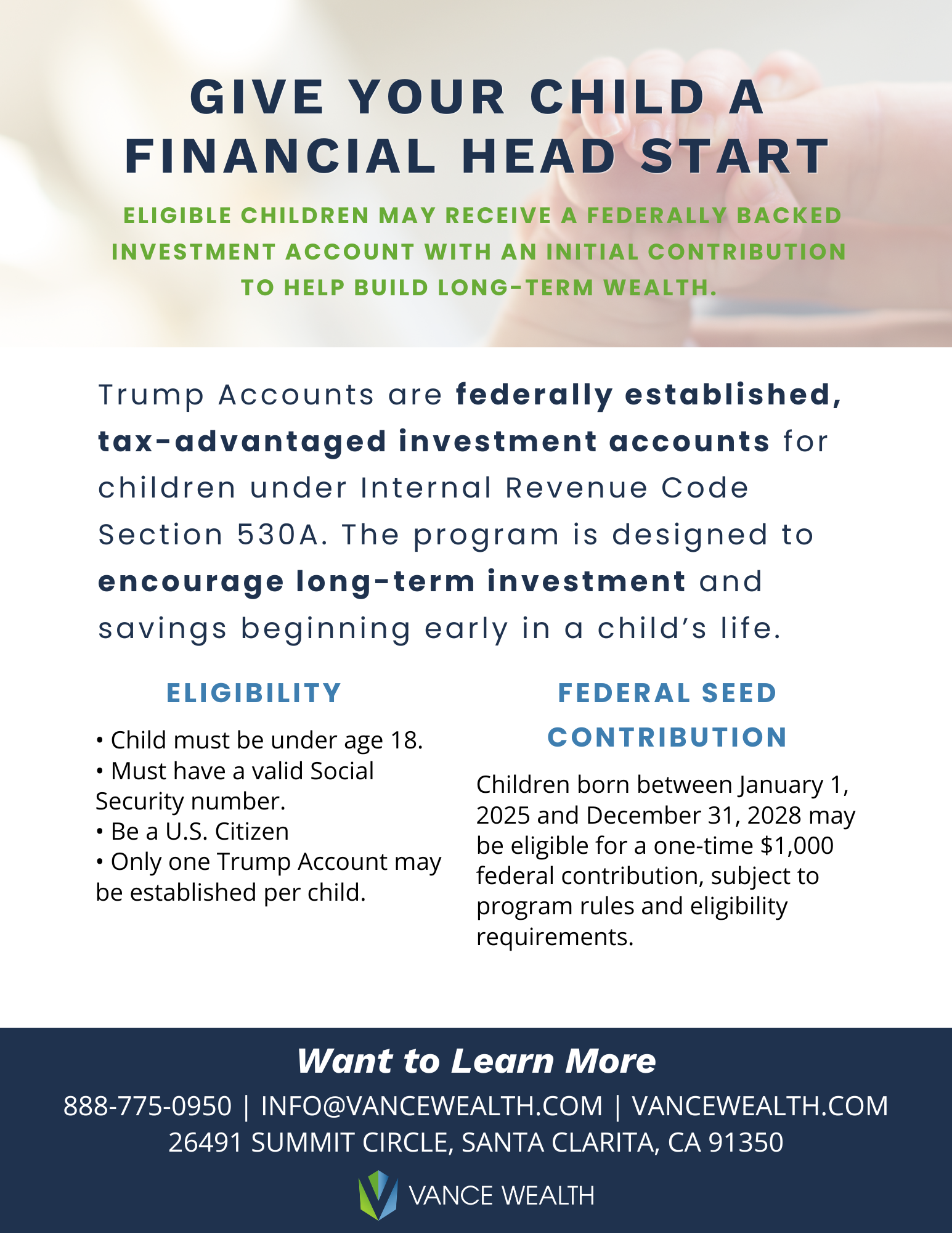
    A new type of federally established savings account — called a Trump Account — is now available for children, and it could be one of the most impactful financial planning tools we've seen in years.

    Under Internal Revenue Code Section 530A, Trump Accounts are tax-deferred investment accounts designed to grow alongside your child from birth all the way into adulthood. Here's what every family in our community should know:

    Free seed money — up to $1,250. Children born between January 1, 2025 and December 31, 2028 may receive a $1,000 federal contribution just for opening an account. On top of that, the Dell family (Michael and Susan Dell) announced a $6.25 billion philanthropic commitment in December 2025 that could add another $250 for children age 10 and under living in low- and middle-income ZIP codes. That's potentially $1,250 in your child's account before you contribute a single dollar.

    Simple eligibility. Any U.S. citizen under age 18 with a valid Social Security number qualifies. Only one account per child.

    Flexible contributions. Starting July 4, 2026, families can contribute up to $5,000 per year. Parents, grandparents, other relatives, and even employers can contribute — and employer contributions up to $2,500 annually are tax-deductible to the employer and excluded from the employee's income.

    Low-cost, long-term investing. By law, these accounts invest in broad U.S. equity index funds (like the S&P 500) with annual fees capped at 0.10%. Growth is tax-deferred — meaning your child's investments compound without an annual tax drag.

    How to open one. File IRS Form 4547 — which can be submitted alongside your 2025 tax return — or apply online at trumpaccounts.gov. Accounts are initially held with the Treasury's designated financial agent, with the option to transfer to a preferred brokerage later.

    One important note: IRS guidance on these accounts is still evolving, and if education savings is your primary goal, a 529 plan may be worth comparing. At 18, your child will have full control of their Trump Account — so planning ahead matters.

    Our team at Vance Wealth is here to help you evaluate whether a Trump Account fits into your family's financial picture. Reach us at 888-775-0950 or info@vancewealth.com.

    The information provided is for educational and informational purposes only and does not constitute investment advice and it should not be relied on as such. It should not be considered a solicitation to buy or an offer to sell a security. It does not take into account any investor's particular investment objectives, strategies, tax status or investment horizon. You should consult your attorney or tax advisor.

    Program details are based on currently available information and are subject to change pending additional IRS and Treasury guidance.

    Vance Wealth is an independent SEC-registered investment adviser and is not affiliated with, endorsed by, or acting on behalf of the U.S. government or any government agency.


  • 10 Jun 2026 by SCV Water

    SCV Water is excited to announce the return of its popular Scout Days program this summer. Running from July 2 through July 30, 2026, the educational program will be offered on Tuesdays, Wednesdays, and Thursdays, from 9 to 11 a.m. Designed for Scouts ages 6-18, Scout Days provides a unique opportunity to learn about water conservation, environmental stewardship, and local water resources through interactive activities and behind-the-scenes experiences.


    About the Scout Days Program

    Scout Days is designed to foster a deeper understanding of water resources, conservation practices, and environmental sustainability. The program features hands-on activities and guided tours that provide participants with an engaging and memorable educational experience.


    Created in response to requests from local Scout troops seeking opportunities to fulfill badge requirements, the program takes place at SCV Water's E.G. "Jerry" Gladbach Water Treatment Plant, located above Central Park in Santa Clarita. Participants will explore a variety of water-related topics while completing activities that support badge and advancement requirements.


    Topics Covered

    • State Water Project
    • Watersheds
    • Soil Types
    • Water Conservation


    Activities Include

    • Water Treatment Plant Tour
    • Interactive Learning Stations
    • Hands-on Activities that Support Badge Requirements
    • Opportunity to Earn a Scout Days Fun Patch


    Participants may register as a Patrol, Pack, Troop, or individually with an adult chaperone. Chaperones must be at least 18 years old and remain with participants throughout the program.


    How to Register

    Registration for the 2026 Scout Days program is now open. Sessions will be held July 2-30, 2026, on Tuesdays, Wednesdays, and Thursdays from 9 to 11 a.m. Interested participants can learn more and register by visiting yourscvwater.com/scouts or by contacting Water Education Supervisor Jenny McNerney at jmcnerney@scvwa.org.


    Space is limited, and advance registration is encouraged.


  • 09 Jun 2026 by Koegle Law Group, APC


    California business owners are used to seeing new regulations arrive early and often. So, when New York quietly steps into that role on a new hot-button issue, California employers should pay very close attention.

    What lands in Albany today may find its way to Sacramento tomorrow.

    On December 11, 2025, New York Governor Kathy Hochul signed S.8420-A/A.8887-B — the AI Transparency in Advertising Act — into law. It takes effect June 9, 2026, making New York one of the first states in the country to directly regulate how artificial intelligence is used in advertising.

    The law’s core requirement is straightforward: if a commercial advertisement uses a “synthetic performer” — an AI-generated humanlike figure that is not a real, identifiable person — the advertisement must include a clear disclosure that AI was used.

    And the law extends to television commercials, digital advertising, social media campaigns, influencer marketing, and more.

    New York may have blinked first. But California is watching.

    Business owners who use AI in their advertising and marketing today are operating in a rapidly changing legal environment. The time to understand your obligations, review your vendor contracts, and build a clear disclosure practice is now — not when the next bill passes and businesses are given 90 days to comply.

    At Koegle Law Group, we partner with California employers and business owners to provide practical legal guidance that supports compliance, informed decision-making, and long-term business stability. As technology changes, proactive planning can help leadership teams move forward with greater clarity and confidence.

    Read the full article here: New York Just Blinked First on AI Advertising — California Employers, You’re Next

    DISCLAIMER: This client alert is provided for informational purposes only and does not constitute legal advice. The information contained herein may not reflect the most current legal developments. You should consult with qualified legal counsel before taking any action based on the information in this alert. Receipt of this alert does not create an attorney-client relationship.

    This article was originally published by Koegle Law Group, proudly serving businesses in Santa Clarita and beyond. This communication may be considered advertising material under the rules of professional conduct governing lawyers in California.

  • 09 Jun 2026 by SchlickArt

    “What about bums on seats?”

    Lindsay’s voice cut through the room during one of our big-picture planning days at SchlickArt.

    The whole team had been gathered around oversized Post-it notes, mapping out the vision for SchlickArtTV. The ideas were flying: build brand recognition, share honest stories, pull back the curtain, increase community impact, correct misconceptions, connect with local leaders.

    It was thoughtful. It was creative. It was very us.

    And then Lindsay stepped back, picked up a Sharpie, and wrote three words at the bottom of the board:

    BUMS. ON. SEATS.

    We all laughed.

    Because of course.

    In all our excitement about what we wanted our content to say, we had almost forgotten what it needed to do: bring in bookings.

    That moment became a turning point in how we think about content strategy—for ourselves and for the clients we guide. Because likes, views, and comments can feel encouraging, but they don’t always translate into inquiries, booked calls, or paying clients.

    And for service-based businesses, that matters.

    Social media is often the first handshake. It’s how people discover you, get a feel for your personality, and start to understand your value.

    But without a strategy that moves people from awareness to trust to action, you may not be marketing as much as you’re simply posting.

    The goal isn’t to make every piece of content a sales pitch. In fact, the best content usually doesn’t feel like selling at all. But it should have a purpose.

    Some content builds visibility.
    Some builds trust.
    Some educates.
    Some invites the right person to take the next step.

    When those pieces work together, content becomes more than something to fill your feed. It becomes part of a real marketing system.

    We’re sharing the full story behind that Post-it note, plus five ways to create content that actually supports business growth.

    Read the full article here:
    Likes Are Not a Strategy: How to Create Content That Converts
     

    Originally published by SchlickArt, a Santa Clarita-based fractional marketing team and visual marketing company serving professional service organizations and growing businesses.


  • 01 Jun 2026 by SCV Water


    Water supplied to customers continues to meet or surpass State and Federal quality standards


    SCV Water’s is proud to announce its 2026 Annual Consumer Confidence Report is now available for customers to review. This year’s report, compiled in partnership with Los Angeles County Waterworks District #36, shows that water provided by the Agency to customers continued to meet or surpass rigorous State and Federal drinking water compliance standards in 2025.


    “Over the past year, SCV Water has continued its mission to restore local water quality and groundwater supplies, while also preparing for the future water needs of Santa Clarita as our community grows,” said SCV Water General Manager Matt Stone. “We are proud to provide our customers with safe, reliable, drinking water. I encourage our customers to read our report to learn more about the quality of your water, our commitment to sustainability, and the work we do protect our local resources.”


    The report, also referred to as a Water Quality Report, is an annual requirement from the State Water Resources Control Board’s Division of Drinking Water (DDW). It provides a snapshot of local water quality supplies in the Santa Clarita Valley and details where the Agency’s water comes from, what it contains, and how it compares to strict water quality standards.


    Before reaching a customer’s tap, the Agency’s water supply must withstand rigorous rounds of treatment and monitoring. More than 20,000 tests per year are performed to ensure a safe water supply is delivered to customers.


    The full report is available online in both English and Spanish:


    All SCV Water customers will receive a bill insert no later than June 30, 2026, notifying them that the report is available. Customers can also obtain printed copies in both languages by calling (661) 294-0828 or emailing ccare@scvwa.org.


    SCV Water is planning for the future by enhancing groundwater sustainability, expanding our recycled water systems, and managing a robust water shortage strategy. The Agency also remains dedicated to exceptional water stewardship by providing reliable quality water to customers.