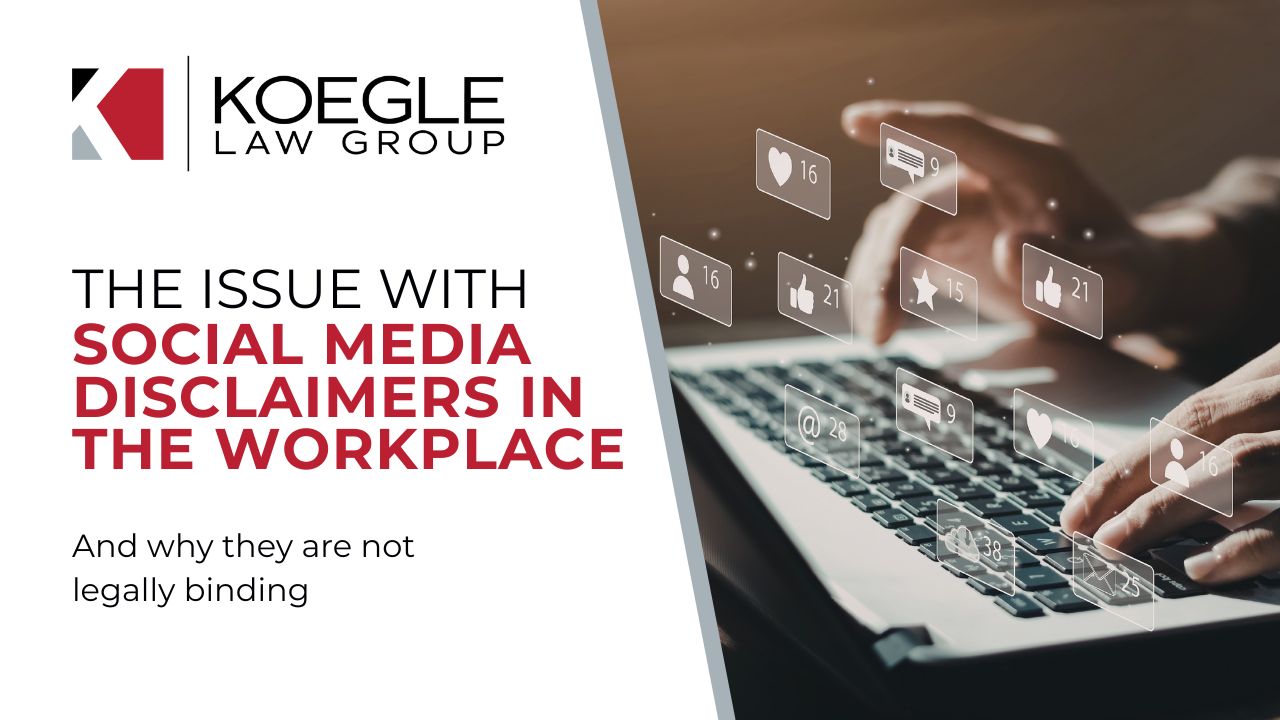
For many business owners, social media has become part of the daily business environment—even when the posts themselves happen outside of work.
Employees may list their employer on LinkedIn, connect with managers on personal platforms, comment on workplace issues online, or include a disclaimer such as, “views are my own.” While that kind of disclaimer may seem helpful, it does not always answer the more practical question employers face:
What happens when online activity starts to affect the workplace?
That is especially important for California employers, where workplace expectations, employee rights, company policies, and manager decision-making often need to be considered together.
At Koegle Law Group, we work with businesses that want to build clearer policies and stronger systems before uncertainty turns into a larger workplace issue. Social media is one area where proactive planning can be especially helpful, because the line between personal expression and workplace impact is not always easy to identify in the moment.
The goal is not to monitor every online interaction or make social media feel more complicated than it already is. It is to create clarity.
When employees understand expectations around professionalism, confidentiality, and workplace conduct, businesses are better positioned to respond consistently. When managers understand appropriate boundaries online, leadership decisions can be made with greater confidence. When policies are reviewed before concerns arise, employers have a stronger foundation for addressing issues thoughtfully.
For Santa Clarita business owners, this topic is especially relevant because social media visibility often overlaps with reputation, workplace culture, customer relationships, and team communication. Whether your business is growing, updating its handbook, training managers, or simply reviewing how online conduct fits into your workplace policies, this is an area worth thinking through before a concern lands on your desk.
In our recent article, Koegle Law Group shares practical considerations for California employers, including:
- Why employee social media disclaimers may not provide the protection businesses expect
- How online activity can create workplace questions even when posts are personal
- Why manager-employee social media connections deserve careful thought
- How workplace policies can help set clearer expectations
- Why handbook language, training, and documentation should work together
- When social media concerns may call for a more careful review of the circumstances
The article is designed to help employers think through social media policies in a practical, business-minded way—with a focus on clarity, consistency, and proactive planning.
Read the full article here: Do Employee Social Media Disclaimers Protect Employers?
At Koegle Law Group, we partner with California employers and business owners to provide practical guidance, clear communication, and proactive legal strategies designed to support informed decision-making over time.
This communication may be considered advertising material under the rules of professional conduct governing lawyers in California.