

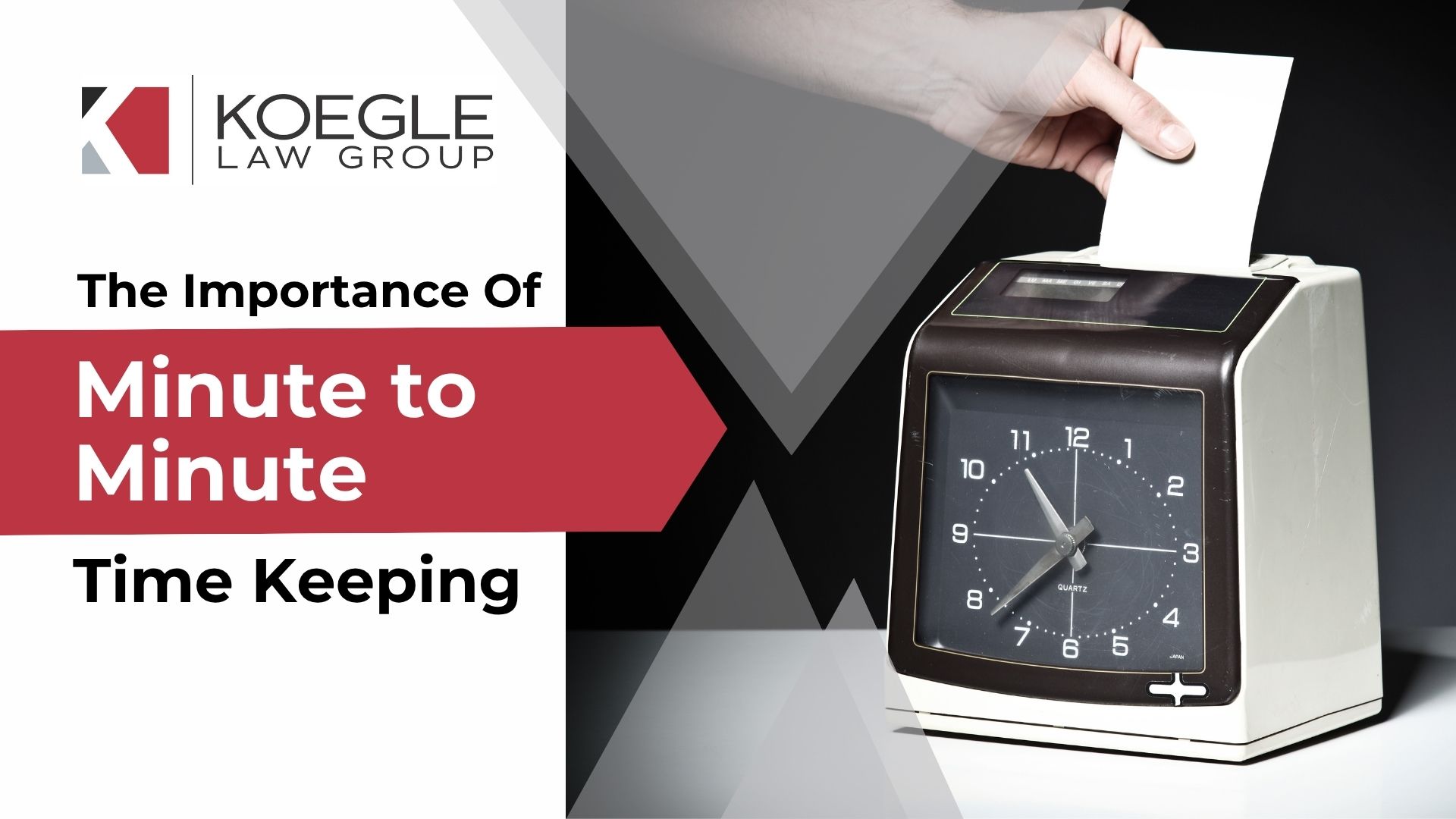
For California employers, accurate timekeeping involves more than asking employees to clock in and out—especially when digital time clocks and payroll apps are involved.
As the California Supreme Court continues to consider Camp v. Home Depot, business owners and HR teams have another reason to understand what happens to employee time between the original punch and the final payroll calculation.
The central issue is straightforward: Does the time your employees record match the time they are actually being paid for?
That is the question at the heart of Camp v. Home Depot.
Home Depot used an electronic timekeeping system that recorded employees’ clock-in and clock-out times to the minute. For payroll purposes, however, the company rounded each employee’s total shift time to the nearest quarter hour. Under that system, some employees gained time and some lost time through rounding.
Home Depot’s system recorded employees’ actual work time, but payroll used rounded time instead. The case now asks whether California employers can continue using neutral rounding when precise time records are available.
Why does that matter for employers?
Many businesses now use digital systems that can record employee time precisely. If a system captures an employee’s actual punch at 8:03 a.m., but another setting converts that time for payroll purposes, the business needs to understand exactly where that change happens and why.
In other words, employers need to understand whether their actual timekeeping technology, payroll settings, and payment practices are aligned.
For Santa Clarita business owners, this is a practical example of why compliance works best as an ongoing process. Businesses change payroll providers, adopt new software, add employees, expand locations, and update internal processes over time. As those systems evolve, employers may want to periodically confirm that the time recorded, the time processed, and the time paid are working together as intended.
In our recent article, Koegle Law Group takes a closer look at:
- What Camp v. Home Depot could mean for California employers and employee time rounding
- Why an employee’s original clock-in and clock-out records matter
- How recorded time can change between the time clock and payroll
- What employers may want to consider when reviewing timekeeping policies and practices
For employers, the bigger takeaway is simple: effective compliance means understanding not only what your policies say, but how your systems carry them out in practice.
Read the full article here: Can California Employers Round Employee Time? What Camp v. Home Depot Means for Timekeeping
At Koegle Law Group, we partner with California employers and business owners to provide practical guidance, clear communication, and proactive legal strategies designed to support informed decision-making as workplace requirements and business operations continue to evolve.
The information contained herein may not reflect the most current legal developments and is not guaranteed to be correct, complete, or up to date. Nothing in this article should be construed as creating an attorney-client relationship. Employers should consult with qualified employment counsel regarding their specific circumstances before taking action based on any information contained in this article.